

Season 1
EPISODE 6
In this episode, Brit and Bethany sit down with documentary filmmaker, regenerative beekeeper, and wildlife scientist Onyx Baird to reframe everything we think we know about bees. From 120 million years of honeybee evolution to the collapse of industrial beekeeping, Onyx offers a clear-eyed, hopeful path toward small-scale, community-centered, bee-friendly landscapes.
“A flowering plant isn’t pollinator-friendly if its pollen is poison.”
—Onyx Baird
Together, they unpack the difference between wild, native, and commercial honeybees, why industrial hive design and queen-breeding have pushed bees to a breaking point, and how designers and homeowners can create regenerative pollinator habitat in their own gardens and neighborhoods. This conversation is as much about landscape practice as it is about food systems, nervous systems, and cultural stories around “tidy” gardens and “dangerous” bees.
From nest-mimicking log and cork hives to bloom choreography, herb gardens as bee medicine cabinets, and talking to neighbors about pesticides, this episode gives landscape professionals and homeowners a practical roadmap for supporting both honeybees and native bees without overwhelming maintenance or risk.
This is a deeply grounded, solution-focused look at how regenerative beekeeping, pollinator habitat design, and neighborhood-scale action can help shift our food systems away from extractive models and toward living, resilient communities.
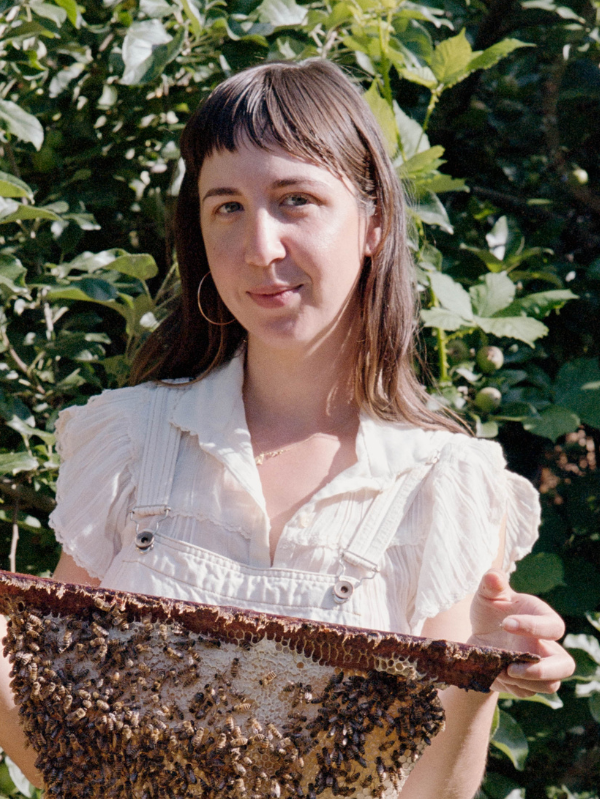
Onyx Baird is a documentary filmmaker, regenerative beekeeper, and wildlife scientist whose work bridges ecology, spirituality, and storytelling. With a master’s degree in Fisheries and Wildlife and years spent studying wildlife diseases and colony collapse disorder, she now focuses on bee-centric, habitat-based beekeeping and education.
Onyx is the creator of Amrita, a feature documentary following women beekeepers in Portugal, Hawaiʻi, and the Yucatán who are protecting wild bee genetics, challenging industrial queen-breeding, and modeling regenerative relationships with bees and land. Through her project Feral Honey, she supports beekeepers, designers, and communities in creating healthy, small-scale bee habitats rooted in respect, reciprocity, and local ecology.
Listen, Watch, and Subscribe
Say hello.
If you’re interested in being a guest or sponsor for the podcast, please contact us at hello@landlanguage.org