

Season 2
“ I think people get intimidated sometimes. ‘Oh, I have to change everything.’ No, just put a few plants in. Put a few natives in that they'll love. Just help in some small way. It does feel good to do that, and I think you just kind of can't go back.”
—Julie Weiss
We explore:
Why it’s important to watch how an installer digs before signing off on plantings
What two years of daily, hands-on training at Great Dixter actually looks like
Why Dixter builds its own compost instead of trucking in amendments
Why native plants sit in the back of some nurseries, and what that says about how people choose plants
Succession planting as a design discipline, not an afterthought
Why some of the best plants in a garden are the bossy ones, if you put them in the right spot
Brit and Bethany connect Julie's stewardship model to their own approaches: a garden isn't a finished product. It's a relationship you keep showing up for.
This episode is for landscape designers, planting designers, and anyone rethinking what their garden owes the rest of the neighborhood.
SEASON 2 EPISODE 6
In this episode of Land Language, we sit down with Julie Weiss, a designer and gardener based in the Pacific Northwest and board member of the North American Friends of Great Dixter. Julie spent eighteen years at Vanity Fair. She then went on to apprentice for two years at Great Dixter under head gardener Fergus Garrett, and came home calling herself a garden steward instead of simply a designer.
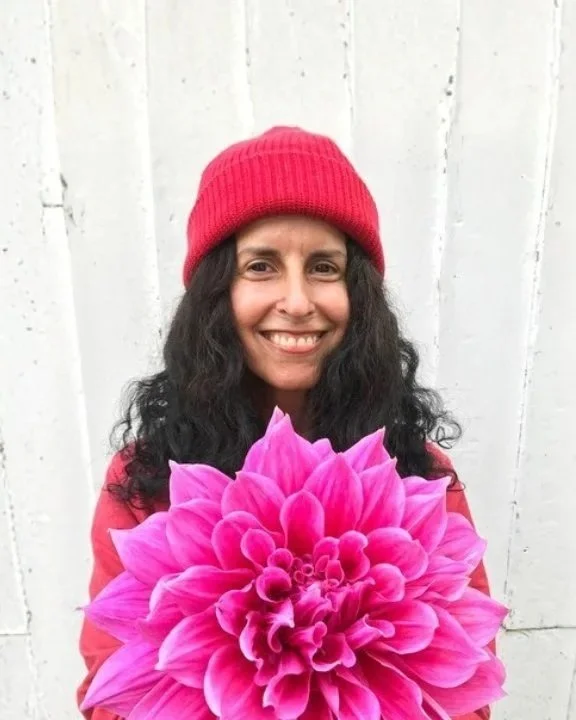
Julie Weiss has designed magazines and books for more than three decades. She spent eighteen years at Vanity Fair, the last ten as art director, after earlier work at The New York Times Magazine and as design director of Artforum International. Her design work has earned recognition from the Society of Publication Designers and the Type Directors Club, and she's served as a juror for SPD's annual competition. She studied landscape design at the New York Botanical Garden, then spent two years in England training under head gardener Fergus Garrett at Great Dixter, immersed in horticulture, biodiversity, and ecological gardening. That education shaped her focus on bringing wildlife back into designed landscapes. She now serves on the board of the North American Friends of Great Dixter and designs gardens in the Pacific Northwest.
Listen, Watch, and Subscribe
Say hello.
If you’re interested in being a guest or sponsor for the podcast, please contact us at hello@landlanguage.org